Last night Fianna Fail issued a statement after the resignation of disgraced Councillor Joe Queenan (don’t you love the camera hidden in the box of tissues!)
The statement was as expected:
“Following the Primetime Investigates Standards in Public Office programme, a Spokesperson for Fianna Fáil commented, “Tonight the Party has accepted the resignation of Cllr Joe Queenan. Some of the behaviour displayed in tonight’s programme was shocking and completely unacceptable. The instances where there appear to be clear breaches of the law need to be fully investigated by the Gardaí and prosecutions brought where appropriate.”
It was an appropriate statement and it was very important that Fianna Fail issued it quickly but I do have a big question – why a Spokesperson?
Why do organisations like this choose to go this anonymous, nothing ‘spokesperson‘ route instead of grabbing the opportunity and demonstrating clear leadership, authority and direction?
We don’t want a ‘Spokesperson‘!!
Instead we want a leader, someone who speaks out, someone who is willing to take responsibility and put their name behind the statement and show clearly what is expected of their organisation.
We want a person who will take the interviews, face the music and show some conviction.
Next time you are writing a press release try to avoid the bland, cop out of the “Spokesperson said” if you want to show leadership and authority and you want people to take you more seriously.
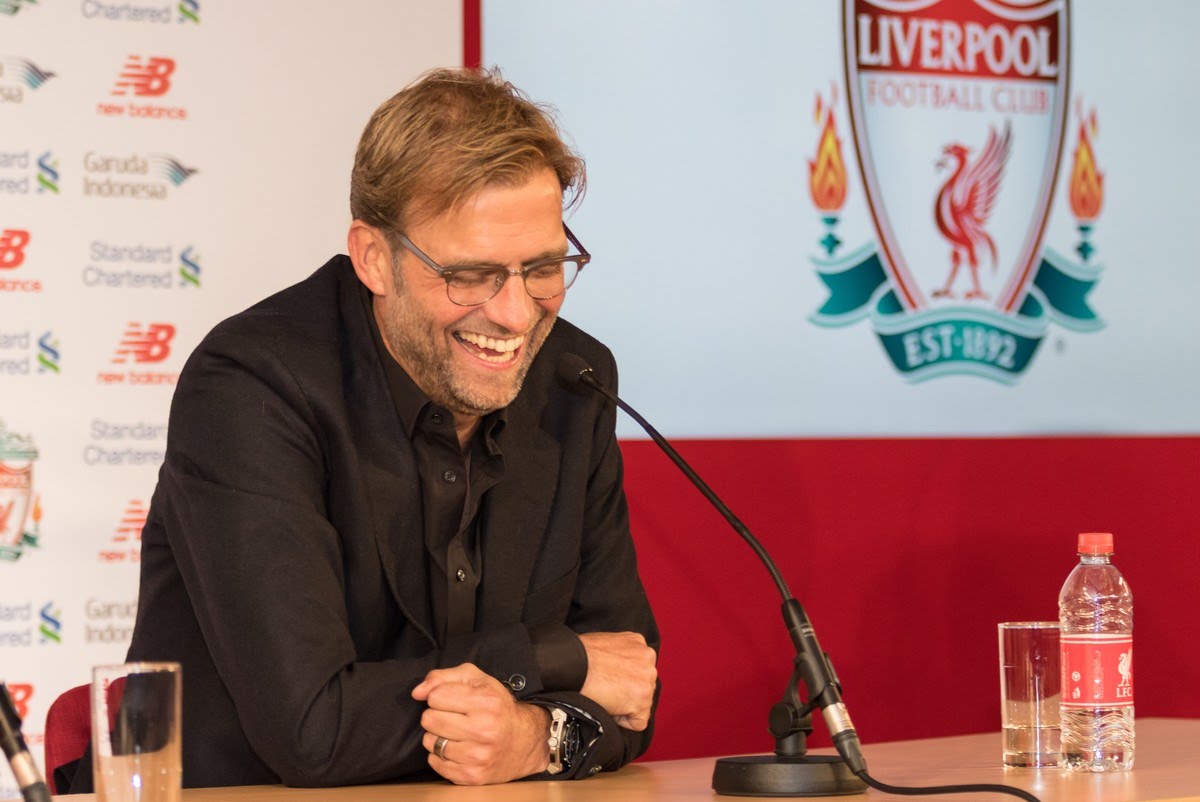
I’m writing this a little bit depressed after a very disappointing defeat away to struggling Newcastle but in general we have seen a transformation of Liverpool FC in the last two months since Jurgen Klopp, the manager has arrived.
The players have been transformed, the same squad that we thought were lousy purchases are now looking like great players and we have had a few very impressive results of late (except for Newcastle!) and it does seem to be wholly down to the charismatic manager (the self declared Normal One) who has previously enjoyed huge success in Germany with Borussia Dortmund.
Pretty much every Liverpool fan believes that success is around the next corner, which was certainly not the case before he joined the club.
How can a manager make such a difference and can the lessons we learn from him be applied to our own businesses?
What does Jurgen do that is so special?
1.”Belief”
The first thing he did when he joined the club was he made a declaration to the fans “We need to change from doubters to believers”
He gave every fan and player something to think about – we must believe if we want to achieve, which is a simple and yet powerful statement.
He went on to say that he believed in the team at the club, which was why he joined in the first place – if you were a player listening to these words you would feel good about yourself.
Do you believe in your team?
2.Honesty, openness and no jargon
When he is asked a question by the media he gives a straight, honest and open answer. He talks in a simple way that we all understand and can relate to.
He tells us that football is a simple game ..he is right!
Can you be open and honest with your team?
3.Don’t be afraid to hug!
We watch him going onto the pitch after the matches and playfully hugging the players. This seems to be a lot more than professionals doing their jobs!
Are people happier when they are treated like this?
4.Have fun
Jurgen loves to laugh, he has a huge smile and he seems to do it all of the time and it is infectious. At the press conferences the media laugh with him.
He tells the players to enjoy themselves on the pitch.
Can work be fun?
5.Don’t take it too seriously
Unlike Bill Shankly the legendary Liverpool manager who said football was “more important than life or death” Jurgen says it is just a game and that it should be enjoyed and not taken too seriously – you can see he lives this.
Are your team so stressed that they can’t function properly?
6.Work Hard
This is a key success factor with him. All of his teams are known for their ferocious work ethic – without hard work you won’t win.
This is totally non-negotiable with him.
Are your team prepared and motivated enough to give you 110%?
7.Have a plan
Already he has managed a few historic victories against some of the big teams and he puts this down to hard work combined with good planning. In one of these matches he fielded a surprising team who played exceptionally and won – he explained after that he had time to plan and prepare with this group of players so there was no point using some of the bigger stars.
Are you planning carefully?
8,Things go wrong – that’s football!
He commented that with the Liverpool team he noticed that they would implode if they conceded in a match and as a result could not recover from this situation.
He has taught the team to accept that things will go wrong and that this is part and parcel of competing – just learn not to give up when it happens!
Do your team have resolve?
9.Mr Motivator
He does seem to have the gift of bringing the best out of each and every single player. He seems to know when a hug works, when a few positive mentions in press conferences will work and when helpful advice from the sideline works (he does scream and roar during the matches).
We clearly don’t see everything that goes on but the players have gone on record as to the huge difference he has made to them.
Do you feel motivating your team is important?
10.Passion
Take just one look at him when he celebrates a goal or even when he lives every kick and moment of the matches…he is incredibly passionate!
If you aren’t passionate can you expect your team to be?
I love the sketch (see below) with Ricky Gervais, Steve Merchant and Karl Pilkington about Christmas presents – it’s that time of the year again and the subject of corporate gifts is upon us!
I remember the first Christmas after we had entered the recession I was dropping a small hamper to a client as a ‘thank you‘ for the business during the year.
The strangest thing happened – he turned me away quite awkwardly and refused to accept the gesture of thanks “not under the circumstances” he said .. “We are in a recession“.
To me I wanted to simply show our appreciation for the work and I felt the gesture was valid regardless of how the economy was going.
That was really the end of the Christmas business gifts as we knew them and even the sending of physical Christmas cards became an exception.
It was noticeable last year as the economy started to improve the gifts and gestures of appreciation started to slowly reappear and I tried to pay particular attention to the ones that impacted on me and the ones that had less impact.
At best the gift gesture should be an opportunity to show appreciation and even strengthen the business relationship – at worst the gesture will make no difference to you and might even make you feel like you are on a big database!
The Thoughtful Gift
This one is a beauty where the person meets you and gives you something they have really thought about, which clearly had significance to you – fantastic!
The Christmas meal
This is a powerful gesture but it is a really time consuming one. With special relationships it is invaluable – if you can break bread together in a relaxed setting then go for it.
The Homemade Gift
On this occasion the person makes something for you … It doesn’t have to be big or extravagant but it was made by them for you. This is an incredibly personal gesture and very powerful.
The Gift for all
This is the gift that you know is one of many. It is great to get a gift but always better if you know it came with special thought and effort. If this is delivered with a personalised card it works.
The Charity Donation
This is definitely a nice idea (it could even be a goat!) but it does rob you of that opportunity of giving something to your client.
The POS gift
The gift of a calendar or diary complete with their logo only works if it is something of genuine quality – if not then it is probably more about them than you .
The Christmas Card
The card alone can be powerful if the sender takes the time to personalise it with a genuine message. Some card is better than no card. Personalising is time consuming but it makes all the difference.
The ‘thank you” message (email/text)
A personalised message (email or letter) with a genuine note of appreciation works well if there is no hint of it being generic. Written well this can be better than any card. This can even work as a text but make sure it is 100% personalised
The E-Card
The generic Christmas card sent by email was a real product of the recession – for me this is just jamming up my inbox and it has very little meaning. Some of these come with a note about Christmas opening hours, which is fine I guess.
I did notice that many of our business relationships weren’t acknowledged in any way – I don’t hold anything against any of these business partners but an opportunity was lost to say thanks and make these relationships stronger.
Christmas is that time of the year that gives you an opportunity for saying thanks and you shouldn’t waste it.
When deciding what gifts to give I wouldn’t worry too much about the monetary value, however I would go along with ‘it’s the thought that counts‘ sentiment and I would add Personalise with a capital ‘P when possible.’
If you want to show genuine appreciation then go for it!
Before we do anything we have to focus on the housing opportunity. Nothing else will work properly without attending to this key issue first.
I attended a really interesting session hosted by the Dublin Chamber of Commerce to discuss the Draft Dublin City Development Plan. There was a big attendance by the top property companies in Dublin as well as other key stakeholders.
There was a presentation by John O’Hara, Acting City Planner of the Dublin City Council. He carefully outlined the areas around Dublin that have been specifically earmarked for development.
The big message from his presentation is that there is a huge demand for residential accommodation and the challenge for the city is to deliver this with the limited space that is available as quick as possible.
There is also big demand for quality office space – however without places for people to live extra offices will only cause problems.
John Moran, Managing Director of Jones Lane LaSalle (JLL) presented their medium term outlook on the property market in Dublin.
The highlights of this presentation were big demand for office and residential property matched with insufficient supply and a rising hotel market with 85% occupancy, one of the highest in Europe. Being practical about it (and it will be very unpopular to say) maybe its a good thing that the Web Summit will be in Portugal next year? – we won’t have the hotel capacity otherwise!
Quite tellingly we heard about two FDI projects that Dublin lost to overseas locations due to lack of sufficient office space. While this was a loss (the people in the audience were concerned when we heard this) would we have been able to provide accommodation to the workers needed in these companies ?
He also spoke about rising rents putting pressure on employees. This is simple – the employee looks for a raise because their rent has been increased by €200 per month – their problem becomes the employers problem and this wage increase (its takes a lot more than €200 to put an extra €200 in a persons pay packet) will be passed onto the customer and before you know it we are uncompetitive all over again.
How did we get back to this place so quickly?
Brendan Foster of Grant Thornton took us through a very interesting case study for a proposed National Concert Hall Quarter, which would deliver considerable much needed city centre office and residential space.
A few things struck me about the session:
Are we not talking?
I was really surprised at the discussion in the room – it struck me that these vested interests had to be brought together by the Chamber for these important conversations to take place. Surely these vital conversations should be happening for more than just 60 minutes? This is very worrying – joined up thinking is required to tackle such a huge issue and a Draft Development Plan for our capital should have much bigger input.
Business first
We all tend to think first about business, attracting more of it, making sure that quality office space is available – both for the big multinationals and the smaller indigenous start ups and service providers.
I could feel the frustration in the room when John O’Hara spent so much time talking about accommodation – we wanted to talk about business, BUT…
Housing is the most important issue that we have to get right very quickly – without this nothing else will happen!
It is clear that Dublin is seriously ‘overcooked‘ and there are serious issues with the supply of social housing, private and accommodation for rental.
If we don’t first sort out the housing challenge quickly in Dublin we should forget about attracting foreign direct investment and encouraging indigenous growth (I hate making that statement) in the city as it will cause further overheating, which we are not able to handle.
Huge Opportunity
The housing challenge in its own right is a huge economic opportunity, which we need to do everything to grasp and facilitate as a huge priority, right now if we want to progress.
“Can you sit us at a good table this time?“…I could hear that familiar question being asked.
Years ago we used take a very glamorous fashion and beauty event on tour around the country – I kid you not!
We did this every six months for about four years, running over 70 events in total. We had the best Irish models, the best of fashion, superb staging and we had many sponsors who felt our event was a clever way of reaching a ‘high-end‘ female consumer.
The event was called Catwalks and in latter years Blossom Hill sponsored it so it evolved into Blossom Hill Catwalks.
The events were complex and very hard work covering every possible thing you could think of from choosing and liaising with venues, deciding and negotiating menus, choosing models and entertainment, pitching to fashion and beauty companies, creating unique branding for each series, executing PR and advertising plans, visiting each location in advance and then selling tickets!
When all of that was done all we had to do was run the events, which was the really heavy duty, demanding and totally exhausting part of the job.
The most delicate and sensitive parts of each event were all about hierarchy!
In the exhibition area which sponsor went in each available space, which brand would start the fashion show and which ended it, and most importantly where did everyone sit?
The seating plan in particular was a very emotional, highly charged one whereby you had the responsibility of deciding where approximately 300 women would sit. In every single function there are great places to sit and not-so-great places. As the organiser you need to decide where each of those women will sit, knowing that your decision will please some and displease others. “Why am I less important than than others?”
This is really tricky and once you go beyond looking after the sponsors (your breadwinners) how do you choose where people who have paid exactly the same for their tickets sit?
My criteria in allocating the best seats used be sponsors first, supporters and influencers second, enthusiastic and really nice people third, prize winners last and everyone else as fair as possible in the middle. This wasn’t an exact science and there was always a group who felt a little hard done by because of where they were sitting and yes I did try to look after the nicer of these with a little extra wine!
There was always an awkward few that you knew might give you a hard time so if you weren’t in the mood for a hard time they might have ended up with a better seat – I hated doing that!
In every walk of life there is a hierarchy and where you are seated, where you are positioned in the brochure, or where your exhibition stand is situated reflects either how much you paid or shows how you are thought of.
Why was I put here?
There is no point getting upset about it …just try to understand why and only if it matters enough figure out how to move up that hierarchy.
Saying the right thing at the right time is a huge skill.
The team need motivating, the meeting needs cooling, a big point needs to be made, a situation needs rescuing, a group needs convincing, the proposal needs selling ..whatever the situation its important to say the right thing and deliver it in a manner that connects with your audience and has the impact you desire.
Like every other skill it is something that we learn over time and sometimes for important things we might even need a little assistance!
We will never surrender
Imagine Winston Churchill making his speech in the House of Commons on the 4th June, 1940 with a country facing war and in serious trouble and the whole population fearful:
“We shall go on to the end, we shall fight in France, we shall fight on the seas and oceans, we shall fight with growing confidence and growing strength in the air, we shall defend our island, whatever the cost may be.
We shall fight on the beaches, we shall fight on the landing grounds, we shall fight in the fields and in the streets, we shall fight in the hills; we shall never surrender”
Winston Churchill wrote most of his own speeches but drafts went through many hands. Some of the ideas for this speech apparently came from an American newspaper editor, William Simms.
I have a dream
Imagine Dr. Martin Luther King standing in front of 250,000 civil rights supporters from the steps of the Lincoln Memorial on August 28th 1963 calling an end to racism in the United States:
“Let us not wallow in the valley of despair, I say to you today, my friends.
And so even though we face the difficulties of today and tomorrow, I still have a dream. It is a dream deeply rooted in the American dream.
I have a dream that one day this nation will rise up and live out the true meaning of its creed: “We hold these truths to be self-evident, that all men are created equal”
Clarence Jones wrote some of Dr. Martin Luther King’s speeches with input from his advisor Wyatt Walker and of course the finishing touches applied by Dr. King. On this occasion Walker did not want there to be any reference to “I have a dream” as he felt it had been overused already by Dr.King in previous speeches.
Apparently Dr King when he felt his prepared speech wasn’t delivering the right impact he decided to abandon his written text and use his “I have a dream” speech. It worked!
Ask not..
Imagine a 43 year old John F Kennedy addressing the crowd in his inaugural, United States Presidential speech in 1961 trying to instil some national pride in it’s citizens:
“My fellow Americans, ask not what your country can do for you – ask what you can do for your country”
Theodore Chaikin “Ted” Sorensen was President John F.Kennedy’s legendary speechwriter as well as his advisor and special counsel. President Kennedy once called him his “intellectual blood bank“.
Yes we can
Imagine another United States President, Barack Obama addressing a crowd in Dublin on May 23rd, 2011 when our country was battered and bruised after a number of torturous recession years with little sign of progress:
“Never has a nation so small inspired so much in another. Irish signatures are on our founding documents, Irish blood was spilled on our battlefields, Irish sweat built our great cities. Our spirit is eternally refreshed by Irish stories and Irish song, our public life by the humour and heart and dedication of servants with names like Kennedy and Reagan, O’Neill and Moynihan”
“This little country, that inspires the biggest things, your best days are still ahead. Our greatest triumphs, in America and Ireland alike, are still to come. And Ireland, if anyone ever says otherwise, if anybody ever tells you that your problems are too big, or your challenges are too great, that we can’t do something, that we shouldn’t even try, think about all we’ve done together. Think about whatever hardships the winter may bring, spring-time’s always just around the corner.
And if they keep on arguing with you, just respond with a simple creed: Is feidir linn. Yes we can. Yes we can. Is feidir linn.”
I watched that speech in our office with the team and I felt it gave everyone in the country an important lift (as well as the Queen’s visit a few weeks previous).
Jonathan E. “Jon” Favreau was the Director of Speechwriting for President Barack Obama who is quite adept at writing his own speeches. In his second term in office he changed to Cody Keenan, who Obama refers to as “Hemingway”, writing in a much more grounded style than the lofty grandiose style of Favreau.
“Yes we can” was the stand out element or ‘tag line’ of Obama’s famous speeches and this nearly never made it as Barack Obama thought it was too “corny” and he had to be persuaded by his wife Michelle to use it!
When it came to ‘saying the right thing‘ even all of these brilliant individuals needed help from someone..
Week after week I watched the pre and post-match interviews.
As a lifelong Liverpool FC fan I’ve been concerned about the team’s loss of form and I am glued to each of those interviews to see what our manager, Brendan Rodgers had to say.
I was starting to feel a lot of sympathy for him as the line of questioning was unrelenting. At each interview it was the same thing “Are you under pressure?” “Are the players under pressure?” “Is the team suffering from a loss of confidence?” “Do you have the backing of the owners?”
Then of course this becomes the topic with all of the pundits, the former players and it makes for headlines in the newspapers “Rodgers under pressure“..the screw is slowly but surely being turned.
Normally the interviews used to focus on the match, the tactics, the performance of players, the injury situation but most of the recent ones were all about his job security. It became the latest episode of an ongoing soap opera.
Interview after interview he batted these questions away, not getting frustrated and insisting that he and the team were not affected but instead they were concentrating on their jobs. He recently did speak about the ‘hysteria‘ around his job by the media and he did mention a ‘group’ who wanted him out.
He did have a point – it was a little over the top.
Match after match the manager of each team must ‘face the music’ – good result or bad result he has to face the media. This must be a tough and very punishing routine when things are not going your way.
I was impressed that the Liverpool team started so impressively in the local derby match against Everton. This was a huge game for him and the team – while the match wasn’t perfect the team were very focused despite the pressure.
Once again after the match he faced the music – it was the same story.
After the same repetitive line of questioning he stated that he didn’t need to look for reassurance from the owners and he hoped he would be the manager for years to come.
This was even more cruelty – the team had just earned a good result away to Everton and this was still the big topic of the questioning!
An hour later when he got off the team bus he was summoned to the office and relieved of his duties. The pressure valve was finally released.
The club confirmed the news by simply posting a press statement on the company website.
This was clearly prepared in advance, carefully crafted and just posted on the website and more than likely issued to the media by their press office.
Ironically no one in management had to sit in front of the media and ‘face the music‘. Their statement would suffice.
Football is a very cruel sport where the players and the managers are in the full glare of the media spotlight constantly and no matter how much they are trained to handle this pressure it must eventually wear them down.
Brendan Rodgers – thank you for the incredible highs of the 2013/2014 season where you had the team playing some of the most incredible and exciting football I have ever seen.
Back in January our Dyson vacuum cleaner packed up and we were more than happy to replace it with another one. It’s a brand I really believe in, so much so that I wrote a blog about it called ‘Hoovering and Storytelling‘.
Three weeks ago we had a problem with our relatively new Dyson so we rang the customer service number and after a very straight forward, quibble free process the offending part would be replaced and delivered to us. The promise was that we would have it within ‘10 working days‘.
To be honest I thought 10 working days was quite a long time for a part they said was in stock but at least they were going to replace it and in the meantime we would manage.
Three weeks passed and there was no sign of our part so we called the Dyson customer service number. They had a record of our transaction and confirmed that due to a system glitch the part had not been dispatched. The operative was very polite, very apologetic but explained that unfortunately we were back at the beginning of the process again and a replacement part would take up to 10 working days to get to us.
It was time to take a stand and explain that this really wasn’t good enough.
Without getting argumentative we asked the operative if there was some way of expediting the delivery of our part. He told us he needed to check with his supervisor so he put us on hold briefly. After about two minutes he came back to us and confirmed that while the circumstances were unfortunate there was “nothing they could do“.
I detest those words because quite simply there is always something that can be done. ‘There is nothing I can do‘ is a choice about what you are prepared to do, a choice about what is acceptable.
This was the system.
We left him know that we weren’t happy and that surely there is ‘always something that can be done‘? Nope ..
We had exhausted the ‘official channel‘ so we reluctantly reverted to twitter to vocalise our disappointment with the Dyson brand.
Immediately the Dyson social media team reacted and wanted to know what happened. Without too much fuss they confirmed that what happened wasn’t good enough, that it wasn’t consistent with the Dyson culture so they would investigate our situation immediately and check with the customer service team.
They thanked us for highlighting a ‘flaw‘ in their customer service procedures, which they would take on board as a learning. Instead of waiting 10 days for a replacement part a new, better machine would be delivered to us in three working days.
With all of our businesses we have to make decisions on a regular basis about how we handle complaints. What do we do, how quick do we respond, what is fair – what do we decide is acceptable?
Things will inevitably go wrong from time to time and while we all hate complaints we need to make a decision about how we deal with them. A complaint is a great way to show the real ethos of your business and instead of saying ‘there is nothing I can do‘ we need to embrace the issue, do our very best and learn from it.
If you were cynical you might decide that Dyson reacted because the issue was highlighted on a public social media platform but I do believe they were genuine and they rose to the Customer Service Challenge. Instead of being a negative for the brand it is a positive. My faith is restored!
I was sitting on a plane coming back from London on the late flight and I noticed someone a few seats ahead of me on the opposite side flicking through the newspaper. I hadn’t tuned into the news that day so I was trying to soak up the headlines as best I could to get some hint as to what was going on.
Headlines are quite dangerous because often they are designed to catch your attention and the actual content may not fully reflect the ‘story’ that is portrayed. You only discover this when you actually read the article but often we never get that opportunity as when we are busy we flick the pages of the newspaper and very quickly we start to consume the ‘headlines‘ as the actual stories.
This headline had the words ‘Housing Crisis‘ in it and as it would imply there must be a housing crisis. I have read these words in so much coverage lately that it would be correct in assuming that we have a big ‘housing crisis‘ on our hands.
If you Google the words ‘housing crisis‘ you will get a mountain of listings with many published in the last few days.
When we read the articles you will hear about the lack of supply, small numbers of houses being built, negative equity, repossessions, rising rents, tighter controls over bank lending, NAMA and developers sitting on land banks and a looming homelessness crisis.
For the most part it is all negative rhetoric and that word ‘crisis’ is bring used over and over, so much so that we should all get depressed.
In any other industry if you were to describe this exact set of circumstances we would be using the words ‘opportunity‘ instead:
There is high demand for the products and lack of supply
The demographics indicate that this demand will sustain itself into the future
Prices are rising due to demand but there are also low interest rates and an improving economy
Employment levels and income are rising
Fulfilling this demand (10,000 units per annum extra) will create 25,000 extra jobs
More jobs means more ability to pay, creating even more demand
Demand will generate income for the government
Demand will stimulate growth in supporting industries
Why aren’t we using the word opportunity and looking at the upside and the huge positives?
If this was any other sector, businesses would be seizing the opportunities and they would be supported by the banks. If we could create 25,000 new jobs there would be all sorts of supports and incentives on offer by the government.
And what about all of the ancillary products and services? – the carpets, curtains, tiling, fittings, furniture and electrical sales which would come after all of the professional services. That would be a huge amount of economic activity.
When it comes to property we are suspicious, we are fearful it will ‘overcook‘ the economy once again and we feel that any incentives given to consumers will be abused by the developers. It’s an industry that we distrust and the word ‘greed‘ seems to automatically apply because of the excess of the Celtic Tiger, which is still fresh in all our minds.
Despite this negativity around the industry I am very puzzled that no one is writing about these obvious positives so I have a peep at the Construction Industry Federation website to see what they are saying.
I came down the stairs to let our four legged one, Mr Bing out and I couldn’t believe it when I found him lying there, half on and half off his bed in the kitchen.
It was obvious that our 13 year old precious dog had passed away during the night unexpectedly and the moment we always dreaded had arrived – he was gone.
I had the awful job of telling Dee and then we had the even more awful job of figuring out what do to next. I had no idea as I was never in that situation before.
Outside the rain poured down and I briefly imagined that we would have to bury him in the garden – is that what you did? I had no idea.
In between the tears and the upset we managed to gather ourselves and call the local vet. We were the worst customers ever as Bing had only ever been there twice (just as well as he hated the vet!) – he was the most convenient dog ever, including picking a Sunday to wave goodbye to us!
The vet had a ‘for emergency use only‘ number and within seconds I found myself explaining our situation to the kind voice at the other side of the phone.
“I’m so sorry to hear your news, you must be very upset. I will be at the veterinary surgery at 11 if you want to bring him over. Don’t worry we will take good care of him”
He immediately settled us down and now we had the very upsetting job of carrying Bing from the house for the last time and into the car to make our way to the vet surgery in Togher.
Poor Dee was inconsolable as we drove to the vets. When we arrived there I went inside and was greeted by the loveliest and gentlest person, a girl called Karen.
“I am so sorry” she said . “Let me open up the door at the back and I’ll help you bring him in” . This gentle woman helped me carry in our precious Bing and she covered him respectfully in a blanket.
As I went through the details with Karen I realised that I had to bring Dee in to figure out some of the options about cremation and what we wanted to do with his ashes. Karen realised how upset Dee was but we managed to get through the arrangements before saying goodbye to Mr Bing for the last time.
Dee wanted to put our own blanket on Bing, which we did. “Don’t worry , I’ll take good care of Bing until he is collected next Friday” Karen reassured us.
Before we knew it we were on the way home with empty hearts and plenty of tears but Karen made this horrible experience so much better.
She could not have been better, she fully understood how upset we were and she was absolutely perfect with us. She emotionally attuned to us and delicately went about the job that had to be done efficiently and professionally.
Our scenario was a very obvious emotional situation and she read it and attuned to it.
Not all emotional situations are as obvious as this one: I can’t afford to pay, the last customer caught us, the last work was shoddy, someone is sick in the family, I’m not well in myself, I’m worried about my kids or something bad has happened on my way here…it could be anything that has you in that emotional state.
The emotionally attuned person might pick up on this and flex accordingly but unfortunately many won’t do this even when the situation is very obvious. We are all too familiar with these situations “I’m sorry but there is nothing that I can do” might sound familiar! This is when it is too easy for someone to say the wrong thing and upset the situation, which could easily lead to it spiralling out of control.
The next time you are dealing with a customer try to emotionally attune and if you are the customer assume the person serving you is not a mind reader and do your best so they can understand your state of mind. We can all do better if we understand how the other person is feeling.
A huge thank you to Karen from Abbeyville Vetinary – you were absolutely brilliant with us and as for Mr Bing, we will always miss you xx









 Greg Canty Fuzion Blog