Posts Tagged ‘Dublin’

Friend or Foe?

January 18, 2016

Gladiator - Greg Canty

I found myself in the middle of a series of emails back and forth with a business colleague (I hate that word) who I have a really great relationship with.

There was some confusion about an issue and we clearly had a different interpretation of the ‘facts‘ and as result our explanatory emails to each other were not helping!

What I was saying to him was clarifying nothing and vice versa and as a result a little tension and frustration had crept into our communications.

You could see an edge creeping into the tone and the language both of us were using…. this was heading to a bad place. It would have taken very little at this stage to drag the tone lower and raise the tension and before you know it we both would have our swords and shields out ready to do ferocious battle.

In the blink of an eye a great and very productive and enjoyable relationship could be ruined forever.

Both of us thankfully avoided the awful trap and we picked up the phone recognising that an actual conversation was the best way to sort out the issue.

Step back, take a deep breath and make a decision to be a friend and not a foe… It’s s much better place to be.

Greg Canty 

Greg Canty is a Partner of Fuzion PR, Marketing and Graphic Design, with offices in Dublin and Cork

The Culture Creep

December 29, 2015

Tony Hsieh

Tony Hsieh, CEO and founder of Zappos speaks about culture in a very clear way “Our belief is that if we get the culture right, most of the other stuff – like delivering great customer service, or building a long-term enduring brand and business will happen naturally on its own

He believes in this so much that every year he produces a ‘culture book‘ for the company. This isn’t something that management drafts with rules and guidelines and inspirational words but it is something that all employees, partners and vendors are invited to feed into.

The submissions are not edited except for typos as it is intended to capture the culture of his special club.

He gets that the culture of the business is the driving force behind it but he also gets that you can’t dictate it – it is what it is and he uses the book to capture the pulse of the organisation in a clean way.

If you read Hsieh’s book ‘Delivering Happiness‘ you will learn the lengths the company goes to, to ensure that the right culture is ingrained in every employee from the minute they join and even some novel ideas to encourage people who “don’t fit” to quickly exit (they will pay you €2,000 to quit!) to ensure they don’t infect the business.

Culture creep

An article caught my attention recently in the Daily Telegraph about the recent VW scandal with the headline ‘Emissions rigging scandal was caused by the firm’s culture

VW Scandal

The chairman, Hans Dieter Potsch stated that “misconduct, flaws in our processes and an attitude that tolerated breaches of rules” had been allowed stretching back over a decade and ending with the company deliberately cheating pollution control tests on a massive scale.

He went on to state “This was not attributable to a once off error, but an unbroken chain of errors“.

The day an employee starts a new job they quickly learn the lay of the land – what is the place like, what does it take to progress, what things get you in trouble, what are the golden rules?

These important things aren’t what is printed in the ‘hand book‘ or on the company website but they are the living, breathing dynamics of everyday work life that you need to learn quickly if you want to survive and progress in your new job.

Ironically on the VW website they have a campaign called “Think Blue” . Read the blurb: “Everyone can help to treat our environment better. At Volkswagen we are not satisfied just to build cars with lower CO2 emissions. Instead we have taken a much more holistic attitude towards ecological sustainability: “Think Blue.

I couldn’t find anything on their website about the culture and values of the company.

What happened at VW ?

It seems that a culture creep happened whereby my boss thought it was ok to bend the rules because his boss thought it was ok because his boss said it was and this obviously crept up and down the organisation until a culture of honesty and integrity (corporate buzzwords you will regularly see as key values) had virtually disintegrated. This however didn’t stop the marketing machine with their ‘Think Blue‘ campaign!

This culture creep obviously took years to infect the company but it did have to start somewhere with people in senior positions for whatever reasons (pressure, bonuses, incompetence?) making really damaging decisions, which have possibly irrevocably wrecked the proud reputation of this fabulous company built gradually since the forties.

A strong culture is a core element of your brand and it needs to be nurtured and protected by every single person in your organisation. The branding, inspirational taglines, value statements, books and brochures should be expressions of this culture but they must be real and must genuinely reflect the ethos and ‘truth‘ that exists in the business.

Anything else will eventually be found out..

Greg Canty is a Managing Partner of Fuzion Marketing, PR and Design.

 Fuzion provide Crisis PR services and run Brand Workshops for clients from our offices in Dublin and Cork, Ireland


Building your Reputation Wall

December 28, 2015

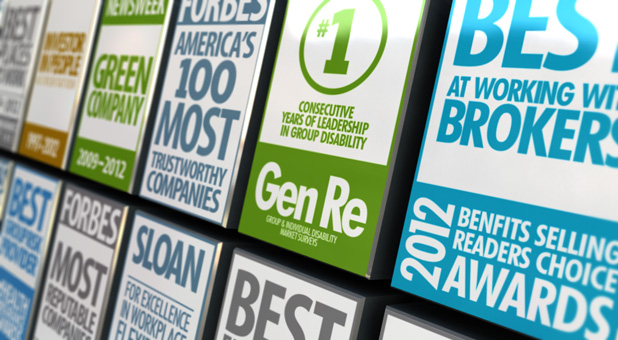
awards wall

We were back at this point again with a client of ours.

We were being asked by the media if our client would do interviews as a result of some really great news that we had pushed out in a press release.

Of course we had advised our client that this would more than likely happen but she was adamant that she did not want to do newspaper and radio interviews “I hate to be seen as blowing my own trumpet” and “won’t the media be quick enough to cut the legs from you when things go wrong?“.

These were really ‘hard set‘ beliefs that she had and there was no shifting them. As her communications advisers we had to push her and explain that doing these interviews would be great for the business and would help to achieve the objectives that they had set for us.

Her last comment really struck a chord with me – “Won’t the media be quick enough to cut the legs from you when things go wrong?”

To be honest when things go wrong everyone will question what happened and this is the general public and the media. Mostly you can’t predict when these things happen but sometimes you can. In either case you should be prepared by having carefully built up your reputation wall.

Reputation Wall

Imagine all of the good things that you and your organisation does – these things will help to start building a “reputation wall” for you.

Great products, excellent customer service, paying your suppliers on time, being courteous in business, being a responsible corporate citizen, looking after your team and doing charitable work are all fantastic things that help to build that reputation wall with your various stakeholders.

They are a great company” is what you want people saying about you.

PR can help to accelerate your good news and with the help of some careful planning this reputation wall will be built even higher by reaching a much wider audience through the media and other communications channels such as social media.

Your reputation wall will hep you win business, get loans, get credit, get planning permission, get landlords wanting you as their tenant, attract great staff but this isn’t the only time it will help you.

In the event that something does go wrong (and it often does unless you are extremely lucky) your organisation will be seen as one that should be believed and trusted and as a result you will be forgiven for whatever has gone wrong. The higher and stronger your wall is the more it will protect you.

I explained all of this to my client and thankfully she did listen to me and agreed to do one of the radio interviews. I smiled as I listened to her doing her fantastic company proud.

How is your reputation wall?

Greg Canty 

Greg Canty is a Partner of Fuzion PR who offer PR and Crisis PR services in Ireland from our offices in Dublin and Cork

The difference between Leadership and a “Spokesperson said”

December 8, 2015

Councillor Joe Queenan

Last night Fianna Fail issued a statement after the resignation of disgraced Councillor Joe Queenan (don’t you love the camera hidden in the box of tissues!)

The statement was as expected:

Following the Primetime Investigates Standards in Public Office programme, a Spokesperson for Fianna Fáil commented, “Tonight the Party has accepted the resignation of Cllr Joe Queenan. Some of the behaviour displayed in tonight’s programme was shocking and completely unacceptable. The instances where there appear to be clear breaches of the law need to be fully investigated by the Gardaí and prosecutions brought where appropriate.”

Click to view the full Fianna Fail Joe Quennan statement.

It was an appropriate statement and it was very important that Fianna Fail issued it quickly but I do have a big question – why a Spokesperson?

Why do organisations like this choose to go this anonymous, nothing ‘spokesperson‘ route instead of grabbing the opportunity and demonstrating clear leadership, authority and direction?

We don’t want a ‘Spokesperson‘!!

Instead we want a leader, someone who speaks out, someone who is willing to take responsibility and put their name behind the statement and show clearly what is expected of their organisation.

We want a person who will take the interviews, face the music and show some conviction.

Next time you are writing a press release try to avoid the bland, cop out of the “Spokesperson said” if you want to show leadership and authority and you want people to take you more seriously.

Well done to the Primetime Investigates team at RTE!

Greg Canty 

Fuzion PR Services – Cork and Dublin, Ireland 


Christmas Presents

December 1, 2015

Goat for Christmas

I love the sketch (see below) with Ricky Gervais, Steve Merchant and Karl Pilkington about Christmas presents – it’s that time of the year again and the subject of corporate gifts is upon us!

I remember the first Christmas after we had entered the recession I was dropping a small hamper to a client as a ‘thank you‘ for the business during the year.

The strangest thing happened – he turned me away quite awkwardly and refused to accept the gesture of thanks “not under the circumstances” he said .. “We are in a recession“.

To me I wanted to simply show our appreciation for the work and I felt the gesture was valid regardless of how the economy was going.

That was really the end of the Christmas business gifts as we knew them and even the sending of physical Christmas cards became an exception.

It was noticeable last year as the economy started to improve the gifts and gestures of appreciation started to slowly reappear and I tried to pay particular attention to the ones that impacted on me and the ones that had less impact.

At best the gift gesture should be an opportunity to show appreciation and even strengthen the business relationship – at worst the gesture will make no difference to you and might even make you feel like you are on a big database!

The Thoughtful Gift

This one is a beauty where the person meets you and gives you something they have really thought about, which clearly had significance to you – fantastic!

The Christmas meal

This is a powerful gesture but it is a really time consuming one. With special relationships it is invaluable – if you can break bread together in a relaxed setting then go for it.

The Homemade Gift

On this occasion the person makes something for you … It doesn’t have to be big or extravagant but it was made by them for you. This is an incredibly personal gesture and very powerful.

The Gift for all

This is the gift that you know is one of many. It is great to get a gift but always better if you know it came with special thought and effort. If this is delivered with a personalised card it works.

The Charity Donation

This is definitely a nice idea (it could even be a goat!) but it does rob you of that opportunity of giving something to your client.

The POS gift

The gift of a calendar or diary complete with their logo only works if it is something of genuine quality – if not then it is probably more about them than you .

The Christmas Card

The card alone can be powerful if the sender takes the time to personalise it with a genuine message. Some card is better than no card. Personalising is time consuming but it makes all the difference.

The ‘thank you”  message (email/text)

A personalised message (email or letter) with a genuine note of appreciation works well if there is no hint of it being generic. Written well this can be better than any card. This can even work as a text but make sure it is 100% personalised

The E-Card

The generic Christmas card sent by email was a real product of the recession – for me this is just jamming up my inbox and it has very little meaning. Some of these come with a note about Christmas opening hours, which is fine I guess.

I did notice that many of our business relationships weren’t acknowledged in any way – I don’t hold anything against any of these business partners but an opportunity was lost to say thanks and make these relationships stronger.

Christmas is that time of the year that gives you an opportunity for saying thanks and you shouldn’t waste it.

When deciding what gifts to give I wouldn’t worry too much about the monetary value, however I would go along with ‘it’s the thought that counts‘ sentiment and I would add Personalise with a capital ‘P when possible.’

If you want to show genuine appreciation then go for it!

Merry Christmas and thank you for your custom..

Greg Canty 

Greg Canty is a Partner of Fuzion PR, Marketing and Graphic Design, with offices in Dublin and Cork

Mahatma Gandhi gives valuable advice about Branding

November 23, 2015

Mahatma-Gandhi

I read this simple piece by Mahatma Gandhi, which could easily be used to help you describe the “essence” of your brand:

Your beliefs become your thoughts…

Your thoughts become your words…

Your words become your actions…

Your actions become your values…

Your values become your destiny.

What are your beliefs?

Greg Canty 

Greg Canty is a Partner of Fuzion PR, Marketing and Graphic Design, who conduct brand workshops for clients from our offices in Dublin and Cork


Mickey Mouse

November 15, 2015

Mickey Mouse

Imagine he hands you his business card. You look at it and smile and say “You are Mickey Mouse

Imagine she hands you her brochure. You look at it and smile and say “Ye are a Mickey Mouse outfit

Imagine she asks you to check their website for more information. You look and say to her “Sorry, ye are Mickey Mouse

He pulls up in his van and hops out after travelling to meet you and you say “Ye are a bit too Mickey Mouse for me

You visit their showrooms and the enthusiastic sales person bounces over and asks if she can assist you in any way. “No thanks, you are Mickey Mouse” you reply

Did you receive our presentation they ask. “Sorry, but ye are too Mickey Mouse for us

Can you imagine being that rude to anyone?

How could anyone say such a thing and while I have come across plenty of rudeness in my time you just wouldn’t hear anyone saying something quite so blunt and I guess, hurtful.

However the truth is we do actually say these things the whole time except (unless we have an odd condition) we say them quietly to ourselves. Literally the second we see something we process it and if it is cheap and unprofessional looking we immediately dismiss it as being “Mickey Mouse“.

We can quickly get into an argument that says “looks aren’t everything” and the point will be made that professional looking material is no guarantee of quality and professionalism. Furthermore, isn’t the proof in the eating as the popular saying goes?

All of this is true but from my experience anything that has come across as “Mickey Mouse” has rarely pleasantly surprised me and has never ended up being successful with one big exception!

Walt Disney with Mickey MouseThat is Mickey Mouse himself who was created by Walt Disney in 1928 who knew a thing or two about creating fantastic brands.

If you are serious about what you are doing then don’t let your branding make you look Mickey Mouse!

Greg Canty 

Greg Canty is a Partner of Fuzion PR, Marketing and Graphic Design, with offices in Dublin and Cork


Where are you sitting at the table?

November 9, 2015

dinner dance

Can you sit us at a good table this time?“…I could hear that familiar question being asked.

Years ago we used take a very glamorous fashion and beauty event on tour around the country – I kid you not!

We did this every six months for about four years, running over 70 events in total. We had the best Irish models, the best of fashion, superb staging and we had many sponsors who felt our event was a clever way of reaching a ‘high-end‘ female consumer.

Blossom Hill CatwalksThe event was called Catwalks and in latter years Blossom Hill sponsored it so it evolved into Blossom Hill Catwalks.

The events were complex and very hard work covering every possible thing you could think of from choosing and liaising with venues, deciding and negotiating menus, choosing models and entertainment, pitching to fashion and beauty companies, creating unique branding for each series, executing PR and advertising plans, visiting each location in advance and then selling tickets!

When all of that was done all we had to do was run the events, which was the really heavy duty, demanding and totally exhausting part of the job.

The most delicate and sensitive parts of each event were all about hierarchy!

In the exhibition area which sponsor went in each available space, which brand would start the fashion show and which ended it, and most importantly where did everyone sit?

etiquette-of-queuingThe seating plan in particular was a very emotional, highly charged one whereby you had the responsibility of deciding where approximately 300 women would sit. In every single function there are great places to sit and not-so-great places. As the organiser you need to decide where each of those women will sit, knowing that your decision will please some and displease others. “Why am I less important than than others?

This is really tricky and once you go beyond looking after the sponsors (your breadwinners) how do you choose where people who have paid exactly the same for their tickets sit?

My criteria in allocating the best seats used be sponsors first, supporters and influencers second, enthusiastic and really nice people third, prize winners last and everyone else as fair as possible in the middle. This wasn’t an exact science and there was always a group who felt a little hard done by because of where they were sitting and yes I did try to look after the nicer of these with a little extra wine!

There was always an awkward few that you knew might give you a hard time so if you weren’t in the mood for a hard time they might have ended up with a better seat – I hated doing that!

In every walk of life there is a hierarchy and where you are seated, where you are positioned in the brochure, or where your exhibition stand is situated reflects either how much you paid or shows how you are thought of.

Why was I put here?

There is no point getting upset about it …just try to understand why and only if it matters enough figure out how to move up that hierarchy.

Where are you sitting at the table?

Greg Canty 

Greg Canty is a Partner of Fuzion PR, Marketing and Graphic Design, with offices in Dublin and Cork


But what if someone says something wrong?

October 29, 2015

old way

I was in the middle of a social media training session with the senior team of a client and Mick, who was one of the elder statesmen in the group asked a question.

This brand new world is a scary place for Mick who has been doing his own thing in his own way for a long time and now that day has come. The company believe that they are missing out by not fully embracing technologies that might deliver them business and LinkedIn is the platform they chose for me to run a training session for them.

I’m guessing that Mick and probably some of the other guys have been hoping that this day wouldn’t come but eventually it has arrived and I was the ‘scary monster‘ who was standing up at the top of the room talking about this dreaded LinkedIn, the thing that they feared could possibly render all of their skills, crafted over many years out of date and useless.

His body language, disguised with a little bit of humour screamed “I am choking, please let me out of here!“.

He sat there during the session saying very little.

At the beginning of these sessions I spend a lot of time with the team figuring out what ‘stories‘ they want to tell about their organisation.

We are an experienced team, we have our own R&D department, our technology is ahead of everything else in the marketplace, how the company came about is very compelling, we work with some of the biggest companies, we are successful, we are expanding, there is a genuine 24/7 service and the culture is very strong.”

This is a company you would want to do business with.

We explored how we could communicate some of these things on an ongoing basis with a combination of blog posts, published posts, company and personal status updates on LinkedIn.

I always stress that you must be clear what your objectives are and the messages that you want to communicate. I talk about developing a ‘message board‘ that is built into the organisation social media strategy for the company and this should be shared with all team members to ensure they understand what the content guidelines are.

Out of the blue Mick popped up with a question: “But what if someone says something wrong?“.

I think he had accepted that it was time to face his fear and now he threw out his real fear that in ways has been fuelled by media reports about damage that has been done to organisations by stupid things being posted by people working there.

What could we possibly do to prevent that from happening?

Ironically he made this comment right in the middle of that part of the training where I am setting the content guidelines with the team.

On the phone, chats with team members, meetings with clients, conversations at conferences… we all have the potential to say something stupid or damaging but we are trained and trusted to do our jobs and represent the places we work for properly.

Social media is no different and you do have to trust your teams but you must give them clear guidelines and explain what is expected of them.

Unfortunately those ‘stupid’ mistakes happen when this is not done and when someone inexperienced (typically when someone is “good” on Facebook) and lacking in knowledge about the organisation is given free rein to post for the organisation. It can also happen when an outside agency is appointed to post on behalf of the company without proper briefing and controls.

Mick, you are right but we will make sure this won’t happen here!

p.s. Mick knows his customers and his organisation better than anyone and will fly once he loses his fear.

Greg Canty is a partner of Fuzion

Fuzion offer Social Media Consultancy and Training in Dublin and Cork, Ireland


Be first or be different!

October 16, 2015

last man

Most of the accountancy firms have it down to a fine art at this stage.

As soon as the budget is finalised the newsletters are prepared and issued, mostly by email. Years ago it would be the newspaper the following morning that we relied on.

This year it was no different and very shortly after Michael Noonan finished his budget speech the first e-newsletter hit my inbox with the main highlights.

Nothing too insightful – a summary of the main changes with a token commentary. As you would expect some of the information was relevant to me and some of it was totally irrelevant.

An hour later another e-newsletter hits my inbox from another firm – obviously the same info with nothing extra in terms of commentary or insights.

And then came another and another and after a while it felt like a long distance race where the winners were on their way home and a few well intentioned stragglers came struggling past the finish line.

I had a peep at all of them and except for style differences the content was as expected – virtually identical.

differentiation

Differentiating your business is really difficult in particular when there are many players doing pretty much the same thing. The first firm to produce a e-newsletter on the same day as the budget broke the mould.

When this happened they were seen as unique, very progressive and it was a great way of differentiating themselves – now many others have caught up so this advantage is gone.

The only way to stand out now is to either win the race (Quintas in Cork were the first to hit my email this year) or to do something totally different.

Next year how about getting all of the team ready, each with a list of their clients and prospects. Segment these by type and instead of winning the race why not take a little bit of time and where possible prepare a personalised, customised, more relevant email to each recipient.

This might seem like a huge challenge but with a few versions of the email (each with an emphasis on different topics) and with carefully segmented email lists every recipient could get something very relevant and more useful to them.

Maybe this is something just possible with 20% of the email database – one could send the 80% the generic email.

That’s something I have received from no one and definitely something I would consider to be really valuable and yes, it would make the sender standout…

No matter what you do if you can’t be first try to be different!

Greg Canty 

Greg Canty is a Partner of Fuzion PR, Marketing and Graphic Design, with offices in Dublin and Cork