Imagine he hands you his business card. You look at it and smile and say “You are Mickey Mouse”
Imagine she hands you her brochure. You look at it and smile and say “Ye are a Mickey Mouse outfit”
Imagine she asks you to check their website for more information. You look and say to her “Sorry, ye are Mickey Mouse”
He pulls up in his van and hops out after travelling to meet you and you say “Ye are a bit too Mickey Mouse for me”
You visit their showrooms and the enthusiastic sales person bounces over and asks if she can assist you in any way. “No thanks, you are Mickey Mouse” you reply
Did you receive our presentation they ask. “Sorry, but ye are too Mickey Mouse for us”
Can you imagine being that rude to anyone?
How could anyone say such a thing and while I have come across plenty of rudeness in my time you just wouldn’t hear anyone saying something quite so blunt and I guess, hurtful.
However the truth is we do actually say these things the whole time except (unless we have an odd condition) we say them quietly to ourselves. Literally the second we see something we process it and if it is cheap and unprofessional looking we immediately dismiss it as being “Mickey Mouse“.
We can quickly get into an argument that says “looks aren’t everything” and the point will be made that professional looking material is no guarantee of quality and professionalism. Furthermore, isn’t the proof in the eating as the popular saying goes?
All of this is true but from my experience anything that has come across as “Mickey Mouse” has rarely pleasantly surprised me and has never ended up being successful with one big exception!
That is Mickey Mouse himself who was created by Walt Disney in 1928 who knew a thing or two about creating fantastic brands.
If you are serious about what you are doing then don’t let your branding make you look Mickey Mouse!
“Can you sit us at a good table this time?“…I could hear that familiar question being asked.
Years ago we used take a very glamorous fashion and beauty event on tour around the country – I kid you not!
We did this every six months for about four years, running over 70 events in total. We had the best Irish models, the best of fashion, superb staging and we had many sponsors who felt our event was a clever way of reaching a ‘high-end‘ female consumer.
The event was called Catwalks and in latter years Blossom Hill sponsored it so it evolved into Blossom Hill Catwalks.
The events were complex and very hard work covering every possible thing you could think of from choosing and liaising with venues, deciding and negotiating menus, choosing models and entertainment, pitching to fashion and beauty companies, creating unique branding for each series, executing PR and advertising plans, visiting each location in advance and then selling tickets!
When all of that was done all we had to do was run the events, which was the really heavy duty, demanding and totally exhausting part of the job.
The most delicate and sensitive parts of each event were all about hierarchy!
In the exhibition area which sponsor went in each available space, which brand would start the fashion show and which ended it, and most importantly where did everyone sit?
The seating plan in particular was a very emotional, highly charged one whereby you had the responsibility of deciding where approximately 300 women would sit. In every single function there are great places to sit and not-so-great places. As the organiser you need to decide where each of those women will sit, knowing that your decision will please some and displease others. “Why am I less important than than others?”
This is really tricky and once you go beyond looking after the sponsors (your breadwinners) how do you choose where people who have paid exactly the same for their tickets sit?
My criteria in allocating the best seats used be sponsors first, supporters and influencers second, enthusiastic and really nice people third, prize winners last and everyone else as fair as possible in the middle. This wasn’t an exact science and there was always a group who felt a little hard done by because of where they were sitting and yes I did try to look after the nicer of these with a little extra wine!
There was always an awkward few that you knew might give you a hard time so if you weren’t in the mood for a hard time they might have ended up with a better seat – I hated doing that!
In every walk of life there is a hierarchy and where you are seated, where you are positioned in the brochure, or where your exhibition stand is situated reflects either how much you paid or shows how you are thought of.
Why was I put here?
There is no point getting upset about it …just try to understand why and only if it matters enough figure out how to move up that hierarchy.
Saying the right thing at the right time is a huge skill.
The team need motivating, the meeting needs cooling, a big point needs to be made, a situation needs rescuing, a group needs convincing, the proposal needs selling ..whatever the situation its important to say the right thing and deliver it in a manner that connects with your audience and has the impact you desire.
Like every other skill it is something that we learn over time and sometimes for important things we might even need a little assistance!
We will never surrender
Imagine Winston Churchill making his speech in the House of Commons on the 4th June, 1940 with a country facing war and in serious trouble and the whole population fearful:
“We shall go on to the end, we shall fight in France, we shall fight on the seas and oceans, we shall fight with growing confidence and growing strength in the air, we shall defend our island, whatever the cost may be.
We shall fight on the beaches, we shall fight on the landing grounds, we shall fight in the fields and in the streets, we shall fight in the hills; we shall never surrender”
Winston Churchill wrote most of his own speeches but drafts went through many hands. Some of the ideas for this speech apparently came from an American newspaper editor, William Simms.
I have a dream
Imagine Dr. Martin Luther King standing in front of 250,000 civil rights supporters from the steps of the Lincoln Memorial on August 28th 1963 calling an end to racism in the United States:
“Let us not wallow in the valley of despair, I say to you today, my friends.
And so even though we face the difficulties of today and tomorrow, I still have a dream. It is a dream deeply rooted in the American dream.
I have a dream that one day this nation will rise up and live out the true meaning of its creed: “We hold these truths to be self-evident, that all men are created equal”
Clarence Jones wrote some of Dr. Martin Luther King’s speeches with input from his advisor Wyatt Walker and of course the finishing touches applied by Dr. King. On this occasion Walker did not want there to be any reference to “I have a dream” as he felt it had been overused already by Dr.King in previous speeches.
Apparently Dr King when he felt his prepared speech wasn’t delivering the right impact he decided to abandon his written text and use his “I have a dream” speech. It worked!
Ask not..
Imagine a 43 year old John F Kennedy addressing the crowd in his inaugural, United States Presidential speech in 1961 trying to instil some national pride in it’s citizens:
“My fellow Americans, ask not what your country can do for you – ask what you can do for your country”
Theodore Chaikin “Ted” Sorensen was President John F.Kennedy’s legendary speechwriter as well as his advisor and special counsel. President Kennedy once called him his “intellectual blood bank“.
Yes we can
Imagine another United States President, Barack Obama addressing a crowd in Dublin on May 23rd, 2011 when our country was battered and bruised after a number of torturous recession years with little sign of progress:
“Never has a nation so small inspired so much in another. Irish signatures are on our founding documents, Irish blood was spilled on our battlefields, Irish sweat built our great cities. Our spirit is eternally refreshed by Irish stories and Irish song, our public life by the humour and heart and dedication of servants with names like Kennedy and Reagan, O’Neill and Moynihan”
“This little country, that inspires the biggest things, your best days are still ahead. Our greatest triumphs, in America and Ireland alike, are still to come. And Ireland, if anyone ever says otherwise, if anybody ever tells you that your problems are too big, or your challenges are too great, that we can’t do something, that we shouldn’t even try, think about all we’ve done together. Think about whatever hardships the winter may bring, spring-time’s always just around the corner.
And if they keep on arguing with you, just respond with a simple creed: Is feidir linn. Yes we can. Yes we can. Is feidir linn.”
I watched that speech in our office with the team and I felt it gave everyone in the country an important lift (as well as the Queen’s visit a few weeks previous).
Jonathan E. “Jon” Favreau was the Director of Speechwriting for President Barack Obama who is quite adept at writing his own speeches. In his second term in office he changed to Cody Keenan, who Obama refers to as “Hemingway”, writing in a much more grounded style than the lofty grandiose style of Favreau.
“Yes we can” was the stand out element or ‘tag line’ of Obama’s famous speeches and this nearly never made it as Barack Obama thought it was too “corny” and he had to be persuaded by his wife Michelle to use it!
When it came to ‘saying the right thing‘ even all of these brilliant individuals needed help from someone..
I was in the middle of a social media training session with the senior team of a client and Mick, who was one of the elder statesmen in the group asked a question.
This brand new world is a scary place for Mick who has been doing his own thing in his own way for a long time and now that day has come. The company believe that they are missing out by not fully embracing technologies that might deliver them business and LinkedIn is the platform they chose for me to run a training session for them.
I’m guessing that Mick and probably some of the other guys have been hoping that this day wouldn’t come but eventually it has arrived and I was the ‘scary monster‘ who was standing up at the top of the room talking about this dreaded LinkedIn, the thing that they feared could possibly render all of their skills, crafted over many years out of date and useless.
His body language, disguised with a little bit of humour screamed “I am choking, please let me out of here!“.
He sat there during the session saying very little.
At the beginning of these sessions I spend a lot of time with the team figuring out what ‘stories‘ they want to tell about their organisation.
“We are an experienced team, we have our own R&D department, our technology is ahead of everything else in the marketplace, how the company came about is very compelling, we work with some of the biggest companies, we are successful, we are expanding, there is a genuine 24/7 service and the culture is very strong.”
This is a company you would want to do business with.
We explored how we could communicate some of these things on an ongoing basis with a combination of blog posts, published posts, company and personal status updates on LinkedIn.
I always stress that you must be clear what your objectives are and the messages that you want to communicate. I talk about developing a ‘message board‘ that is built into the organisation social media strategy for the company and this should be shared with all team members to ensure they understand what the content guidelines are.
Out of the blue Mick popped up with a question: “But what if someone says something wrong?“.
I think he had accepted that it was time to face his fear and now he threw out his real fear that in ways has been fuelled by media reports about damage that has been done to organisations by stupid things being posted by people working there.
What could we possibly do to prevent that from happening?
Ironically he made this comment right in the middle of that part of the training where I am setting the content guidelines with the team.
On the phone, chats with team members, meetings with clients, conversations at conferences… we all have the potential to say something stupid or damaging but we are trained and trusted to do our jobs and represent the places we work for properly.
Social media is no different and you do have to trust your teams but you must give them clear guidelines and explain what is expected of them.
Unfortunately those ‘stupid’ mistakes happen when this is not done and when someone inexperienced (typically when someone is “good” on Facebook) and lacking in knowledge about the organisation is given free rein to post for the organisation. It can also happen when an outside agency is appointed to post on behalf of the company without proper briefing and controls.
Mick, you are right but we will make sure this won’t happen here!
p.s. Mick knows his customers and his organisation better than anyone and will fly once he loses his fear.
Most of the accountancy firms have it down to a fine art at this stage.
As soon as the budget is finalised the newsletters are prepared and issued, mostly by email. Years ago it would be the newspaper the following morning that we relied on.
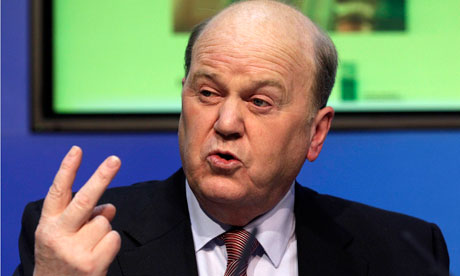
This year it was no different and very shortly after Michael Noonan finished his budget speech the first e-newsletter hit my inbox with the main highlights.
Nothing too insightful – a summary of the main changes with a token commentary. As you would expect some of the information was relevant to me and some of it was totally irrelevant.
An hour later another e-newsletter hits my inbox from another firm – obviously the same info with nothing extra in terms of commentary or insights.
And then came another and another and after a while it felt like a long distance race where the winners were on their way home and a few well intentioned stragglers came struggling past the finish line.
I had a peep at all of them and except for style differences the content was as expected – virtually identical.
Differentiating your business is really difficult in particular when there are many players doing pretty much the same thing. The first firm to produce a e-newsletter on the same day as the budget broke the mould.
When this happened they were seen as unique, very progressive and it was a great way of differentiating themselves – now many others have caught up so this advantage is gone.
The only way to stand out now is to either win the race (Quintas in Cork were the first to hit my email this year) or to do something totally different.
Next year how about getting all of the team ready, each with a list of their clients and prospects. Segment these by type and instead of winning the race why not take a little bit of time and where possible prepare a personalised, customised, more relevant email to each recipient.
This might seem like a huge challenge but with a few versions of the email (each with an emphasis on different topics) and with carefully segmented email lists every recipient could get something very relevant and more useful to them.
Maybe this is something just possible with 20% of the email database – one could send the 80% the generic email.
That’s something I have received from no one and definitely something I would consider to be really valuable and yes, it would make the sender standout…
No matter what you do if you can’t be first try to be different!
“It was an innocent time when for free we all opened personal accounts on Facebook, we connected with friends, shared and uploaded our pictures. It was pure, we were able to communicate and voice our opinions without interference.
Businesses jumped in and opened accounts for free and publicised their wares.
It was really enjoyable and effective with all of us being able to see content that we wanted to.
Unfortunately it all changed when it became big business (like every other business they had to make money!) and now it is just like a huge advertising platform, which no one bothers using any more because we stopped seeing the content that we wanted.
And what about Twitter …We had such fun opening accounts for free and following who we wanted and them in turn following us and interacting as much as we wanted.
Eventually they wanted all of our personal details for advertising purposes and business accounts became different to personal accounts.
Of course the ‘free ride‘ had to finish at some point – we were naive to think it could continue the way it was.
Looking back, considering all of the benefits I enjoyed I think I would have been quite happy to pay a subscription instead of seeing it ruined the way it has been.
It’s a pity it’s gone.
Do you remember when LinkedIn was free and you could connect and post content until the cows came home, all for free!
It’s ironic that it’s half as effective now as it was when it was free!
As for Instagram ..we had great fun posting fab photos and interacting and now unfortunately its full of adverts and corporates posting commercial pics that make our skin crawl!
As for things like Foursquare, Google+, Snapchat, Pinterest and Periscope …. we used them all for about 6 months and then we got bored.
As for social media taking over from newspapers and traditional media – what were we thinking?
Did we really want a world where no one was paying journalists to investigate, where great writers and columnists could not make a living, so they stopped … Crazy!
It did seem like this would happen for a while because we stupidly thought that we could get everything for free – when did that ever make sense?
Inevitably Apple, Microsoft and Google have mopped up everything online and the lesson that there is no such thing as a ‘free lunch‘ has come true.”
I miss those days and wish I could ‘tweet’ again one last time.
I’m listening to the commentary and the opinions about the upcoming budget.
Already the accusations are flying that Fine Gael/Labour will be trying to ‘buy’ the next election by making this a giveaway budget – putting smiles on voters faces and all of the different vested interests is a terrible thing?
Their chairman Brendan Dowling has stated “As market conditions improve and the recovery takes hold, one may question the need for additional fiscal expansion in the upcoming budget”
The Economic and Social Research Institute (ESRI) are making the same noises: “expansionary budgets could inflate the economy“.
This bunch went even further and requested in their latest report that “the government reverse its plan for €1.5bn of spending and tax cuts“. The report author stated “the increase in the pace of economic growth reinforces the case for a neutral budget this year” and “a reduction in personal taxation is not required for growth in household consumption”
Guys … you have got to be kidding me?
The stats show our economy is growing at 6% but surely this is from quite a low base. Personal consumption is starting to grow not because of a huge increase in incomes but because confidence is returning and people are not petrified of spending.
In the last few years big chunks have been taken from all of our pay packets and we deserve to start getting some of this back as things improve – we have to start enjoying the fruits of our labour once again.
Ann Cahill has written a fantastic article in the same issue about how “Workers are ‘left behind’ in Recovery” – this is a fact based article based on the Eurostat report.
Please look at the unemployment figures – we have one of the highest numbers of long term unemployed in the European Union. Take a look at the issues we have with homelessness.
Take one look at the empty shops in our villages, towns and cities and wonder why is this the case? Thankfully there is some progress here and we are starting to see new places opening but there is still a huge way to go.
I welcome with open arms any increase in spending and reductions in taxes – let it come into our pockets and let us enjoy spending it and let us carefully get back to a much better country than the one we have right now.
Week after week I watched the pre and post-match interviews.
As a lifelong Liverpool FC fan I’ve been concerned about the team’s loss of form and I am glued to each of those interviews to see what our manager, Brendan Rodgers had to say.
I was starting to feel a lot of sympathy for him as the line of questioning was unrelenting. At each interview it was the same thing “Are you under pressure?” “Are the players under pressure?” “Is the team suffering from a loss of confidence?” “Do you have the backing of the owners?”
Then of course this becomes the topic with all of the pundits, the former players and it makes for headlines in the newspapers “Rodgers under pressure“..the screw is slowly but surely being turned.
Normally the interviews used to focus on the match, the tactics, the performance of players, the injury situation but most of the recent ones were all about his job security. It became the latest episode of an ongoing soap opera.
Interview after interview he batted these questions away, not getting frustrated and insisting that he and the team were not affected but instead they were concentrating on their jobs. He recently did speak about the ‘hysteria‘ around his job by the media and he did mention a ‘group’ who wanted him out.
He did have a point – it was a little over the top.
Match after match the manager of each team must ‘face the music’ – good result or bad result he has to face the media. This must be a tough and very punishing routine when things are not going your way.
I was impressed that the Liverpool team started so impressively in the local derby match against Everton. This was a huge game for him and the team – while the match wasn’t perfect the team were very focused despite the pressure.
Once again after the match he faced the music – it was the same story.
After the same repetitive line of questioning he stated that he didn’t need to look for reassurance from the owners and he hoped he would be the manager for years to come.
This was even more cruelty – the team had just earned a good result away to Everton and this was still the big topic of the questioning!
An hour later when he got off the team bus he was summoned to the office and relieved of his duties. The pressure valve was finally released.
The club confirmed the news by simply posting a press statement on the company website.
This was clearly prepared in advance, carefully crafted and just posted on the website and more than likely issued to the media by their press office.
Ironically no one in management had to sit in front of the media and ‘face the music‘. Their statement would suffice.
Football is a very cruel sport where the players and the managers are in the full glare of the media spotlight constantly and no matter how much they are trained to handle this pressure it must eventually wear them down.
Brendan Rodgers – thank you for the incredible highs of the 2013/2014 season where you had the team playing some of the most incredible and exciting football I have ever seen.
Back in January our Dyson vacuum cleaner packed up and we were more than happy to replace it with another one. It’s a brand I really believe in, so much so that I wrote a blog about it called ‘Hoovering and Storytelling‘.
Three weeks ago we had a problem with our relatively new Dyson so we rang the customer service number and after a very straight forward, quibble free process the offending part would be replaced and delivered to us. The promise was that we would have it within ‘10 working days‘.
To be honest I thought 10 working days was quite a long time for a part they said was in stock but at least they were going to replace it and in the meantime we would manage.
Three weeks passed and there was no sign of our part so we called the Dyson customer service number. They had a record of our transaction and confirmed that due to a system glitch the part had not been dispatched. The operative was very polite, very apologetic but explained that unfortunately we were back at the beginning of the process again and a replacement part would take up to 10 working days to get to us.
It was time to take a stand and explain that this really wasn’t good enough.
Without getting argumentative we asked the operative if there was some way of expediting the delivery of our part. He told us he needed to check with his supervisor so he put us on hold briefly. After about two minutes he came back to us and confirmed that while the circumstances were unfortunate there was “nothing they could do“.
I detest those words because quite simply there is always something that can be done. ‘There is nothing I can do‘ is a choice about what you are prepared to do, a choice about what is acceptable.
This was the system.
We left him know that we weren’t happy and that surely there is ‘always something that can be done‘? Nope ..
We had exhausted the ‘official channel‘ so we reluctantly reverted to twitter to vocalise our disappointment with the Dyson brand.
Immediately the Dyson social media team reacted and wanted to know what happened. Without too much fuss they confirmed that what happened wasn’t good enough, that it wasn’t consistent with the Dyson culture so they would investigate our situation immediately and check with the customer service team.
They thanked us for highlighting a ‘flaw‘ in their customer service procedures, which they would take on board as a learning. Instead of waiting 10 days for a replacement part a new, better machine would be delivered to us in three working days.
With all of our businesses we have to make decisions on a regular basis about how we handle complaints. What do we do, how quick do we respond, what is fair – what do we decide is acceptable?
Things will inevitably go wrong from time to time and while we all hate complaints we need to make a decision about how we deal with them. A complaint is a great way to show the real ethos of your business and instead of saying ‘there is nothing I can do‘ we need to embrace the issue, do our very best and learn from it.
If you were cynical you might decide that Dyson reacted because the issue was highlighted on a public social media platform but I do believe they were genuine and they rose to the Customer Service Challenge. Instead of being a negative for the brand it is a positive. My faith is restored!
I was sitting on a plane coming back from London on the late flight and I noticed someone a few seats ahead of me on the opposite side flicking through the newspaper. I hadn’t tuned into the news that day so I was trying to soak up the headlines as best I could to get some hint as to what was going on.
Headlines are quite dangerous because often they are designed to catch your attention and the actual content may not fully reflect the ‘story’ that is portrayed. You only discover this when you actually read the article but often we never get that opportunity as when we are busy we flick the pages of the newspaper and very quickly we start to consume the ‘headlines‘ as the actual stories.
This headline had the words ‘Housing Crisis‘ in it and as it would imply there must be a housing crisis. I have read these words in so much coverage lately that it would be correct in assuming that we have a big ‘housing crisis‘ on our hands.
If you Google the words ‘housing crisis‘ you will get a mountain of listings with many published in the last few days.
When we read the articles you will hear about the lack of supply, small numbers of houses being built, negative equity, repossessions, rising rents, tighter controls over bank lending, NAMA and developers sitting on land banks and a looming homelessness crisis.
For the most part it is all negative rhetoric and that word ‘crisis’ is bring used over and over, so much so that we should all get depressed.
In any other industry if you were to describe this exact set of circumstances we would be using the words ‘opportunity‘ instead:
There is high demand for the products and lack of supply
The demographics indicate that this demand will sustain itself into the future
Prices are rising due to demand but there are also low interest rates and an improving economy
Employment levels and income are rising
Fulfilling this demand (10,000 units per annum extra) will create 25,000 extra jobs
More jobs means more ability to pay, creating even more demand
Demand will generate income for the government
Demand will stimulate growth in supporting industries
Why aren’t we using the word opportunity and looking at the upside and the huge positives?
If this was any other sector, businesses would be seizing the opportunities and they would be supported by the banks. If we could create 25,000 new jobs there would be all sorts of supports and incentives on offer by the government.
And what about all of the ancillary products and services? – the carpets, curtains, tiling, fittings, furniture and electrical sales which would come after all of the professional services. That would be a huge amount of economic activity.
When it comes to property we are suspicious, we are fearful it will ‘overcook‘ the economy once again and we feel that any incentives given to consumers will be abused by the developers. It’s an industry that we distrust and the word ‘greed‘ seems to automatically apply because of the excess of the Celtic Tiger, which is still fresh in all our minds.
Despite this negativity around the industry I am very puzzled that no one is writing about these obvious positives so I have a peep at the Construction Industry Federation website to see what they are saying.

 That is Mickey Mouse himself who was created by Walt Disney in 1928 who knew a thing or two about creating fantastic brands.







 Greg Canty Fuzion Blog