I am working on a really interesting project at the moment and because it is quite complex there is a diverse team made up of very talented individuals from different organisations working on it.
We had a full day session, which included a meeting with the client group and instead of being the enjoyable experience I was expecting it was a horrible, draining one.
There is one characters (who happens to be really talented and super valuable) on the team who is just plain rude, arrogant, dismissive and being honest a little nasty. This has led to a testy atmosphere with team members trying to give their opinion but being dismissed in a rude manner.
Everyone witnesses the ‘put down’ and are waiting to see how the person who has just been insulted reacts …. he feels bad, he feels small and he feels weak if he keeps his mouth shut or does he decide to react and let the whole thing bubble over? To be fair to him he decided to bite his lip and eventually other people jumped in and supported him. I’m not sure if my lip would be that resilient.
At the end of the day I was totally wiped out and demotivated and a potentially great project had now disintegrated into something that was hardship. I can’t wait for it to be over is now my main thought but there is still a lot of work to be done with this crew.
I have made an effort at addressing this with this group of people who I don’t know that well .. I did it by email the following day (lets’ see if it makes any difference?)
Team spirit – At times yesterday a horrible, testy atmosphere crept into our team meeting – this makes the work very draining and we have to mind ourselves. The team leader has assembled a talented bunch together for this task – lets get the best from this collective talent and synergise. This is a team folks …lets support each other and make this job a enjoyable one.
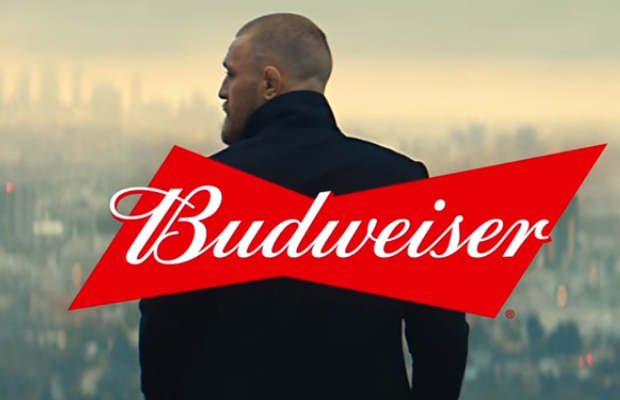
Our state broadcaster, RTE has just banned the Budweiser commercial featuring UFC fighter and Irish hero Conor McGregor.
The banning has already led to newspaper articles, much discussion and a huge curiosity and will inevitably have everyone googling just to see what this “offensive” advert was all about. I suspect they will be left scratching their heads wondering what the fuss was all about.
In many ways this could be deemed as a huge success for the brand because it will now achieve a level of visibility and notoriety that it previously didn’t have, without having to pay the advertising costs.
While it sends out a big message from RTE you would like to think that this is a good, sensible one because we do want there to be watchdogs to protect us from danger. It is important that ‘banning’ makes sense, that it is rational and that it is fair.
The advertising guidelines around alcohol are very strict in Ireland and all of these were followed carefully.
In the advert there isn’t a picture of a bottle of beer, there isn’t a pub in sight. There is just Conor tastefully captured in a scene walking around his home town, Crumlin in Dublin, which then transforms into a street in LA.
This 27 year old apprentice plumber has achieved huge success by dedication to his sport and the advert demonstrates this with the help of these scenes and the voice over by Conor:
Never give up on your dream
Be your own inspiration, a beacon of self belief
Keep proving others wrong
If your dream doesn’t scare you, then its not big enough
So dream, as big as you dare
Only at the very end of the advert do we see the Budweiser logo and the usual drink responsibly message at the bottom of the screen.
For me the message from the advert is a very inspirational one, delivering a powerful positive message. Yes, it does come from a beer brand, which I think is more than ok. It shows you how the guidelines are keeping alcohol brands in a very responsible place and forcing a communication about positive values.
The message coming from RTE in banning this advert?
According to the newspapers they issued a statement to the Sunday Business Post that the advert breached advertising guidelines because Conor McGregor is considered a “hero to the young“, which will in turn encourage them to drink alcohol.
I don’t get it..
In my view banning the advert will achieve the wrong thing (besides totally confusing an industry that is trying to be very responsible) – viewers will definitely seek out the inspirational advert and could instead conclude that we are living in a censorship state that in some way has an issue with people from working class backgrounds having and achieving their dreams.
Banning the advert is also bad for the RTE brand as in my view it shows them as being ultra conservative and this is not good when they are up against such stiff competition. Leaving the censorship to the advertising authorities might be a much better policy.
It’s a great thing that we are seeing extra vigilance about alcohol advertising but we need to make sure that the brands that are working really hard to get it right aren’t punished.
Stephen Donnelly of the Social Democrats did really well during the General Election Leaders Debate on RTE this week. He comes across as an articulate, intelligent and impressive individual and his performance was one of the things that many people were talking about after.
He won over some of the audience!
While he is very impressive it is very hard to buy into a manifesto that wants to keep taxation high and let the state use those funds. If I thought the public service was capable of spending this money wisely and efficiently there might be some merit in his arguments but this just isn’t the case.
Also this high personal taxation philosophy is a huge deterrent for human talent to work and live in Ireland. Sorry Stephen – people want to be able to enjoy the spoils of their labour and will move to more favourable regimes such as the UK to make that possible.
However, Stephen did impress..
My other half, Deirdre Waldron said as much on Twitter (I would consider her to have a lot of influential followers) and effectively she gave his performance a big ‘thumbs up‘ publicly. She wasn’t the only one who did this I noticed.
The Golden Opportunity
While this online endorsement is great for Stephen it leaves a huge ‘Opportunity‘ door wide open for him to walk through. Of course it’s up to him and his team to grab this opportunity.
What if he could do something really simple to grab this tangible goodwill and take it to a higher level?
What if he could do something really easy to take this positive feedback and convert it into a supporter or a fan even?
What if he could take a few little seconds and grab a simple chance to show an online audience that he is a really great and very popular guy?
What if he decides to do nothing?
Do does nothing ..
Dee is thinking …hmm, I said something complimentary and it wasn’t even acknowledged. That’s not very nice, I won’t do that again.
That positive impression has wilted a little
He likes the post..
Dee is thinking…hmm, It’s nice to see that he acknowledged the positive thing that I said. He is one of the good guys.
That positive impression has been reinforced and she might even repeat the positive posts about him in the future.
He engages with the post..
This is the ‘Holy Grail‘ of social media and it is the big prize, the gift, the one thing that is waiting there to be easily plucked from the tree.
Stephen tweets back: “thanks a million” or even better “thanks a million Dee, I appreciate the positive feedback” or even better again “thanks a million Dee, our campaign is really connecting with people”
Dee is thinking..hmm, this guy is the real deal, he would be a great person to have working for us in Dail Eireann. I’m going to follow him and listen carefully to all of his proposals and arguments and I might take his local candidates more seriously.
Now Stephen has won her over and one vote turns into two and so on..
Why is it not happening?
Maybe this very sharp and intelligent guy who is out there giving it everything, just doesn’t get this simple trick? Maybe he just doesn’t have the time? – I’m sure he doesn’t but he can surely get someone who understands his message intimately enough to assist him with his Twitter account.
These are easy wins for Stephen and so many of the other politicians who have positive momentum. If they are serious about getting each of those precious votes then grab the golden opportunities by jumping in – Acknowledge and Engage.
For the rest of us the argument is exactly the same with our online communications:
I found myself in the middle of a series of emails back and forth with a business colleague (I hate that word) who I have a really great relationship with.
There was some confusion about an issue and we clearly had a different interpretation of the ‘facts‘ and as result our explanatory emails to each other were not helping!
What I was saying to him was clarifying nothing and vice versa and as a result a little tension and frustration had crept into our communications.
You could see an edge creeping into the tone and the language both of us were using…. this was heading to a bad place. It would have taken very little at this stage to drag the tone lower and raise the tension and before you know it we both would have our swords and shields out ready to do ferocious battle.
In the blink of an eye a great and very productive and enjoyable relationship could be ruined forever.
Both of us thankfully avoided the awful trap and we picked up the phone recognising that an actual conversation was the best way to sort out the issue.
Step back, take a deep breath and make a decision to be a friend and not a foe… It’s s much better place to be.
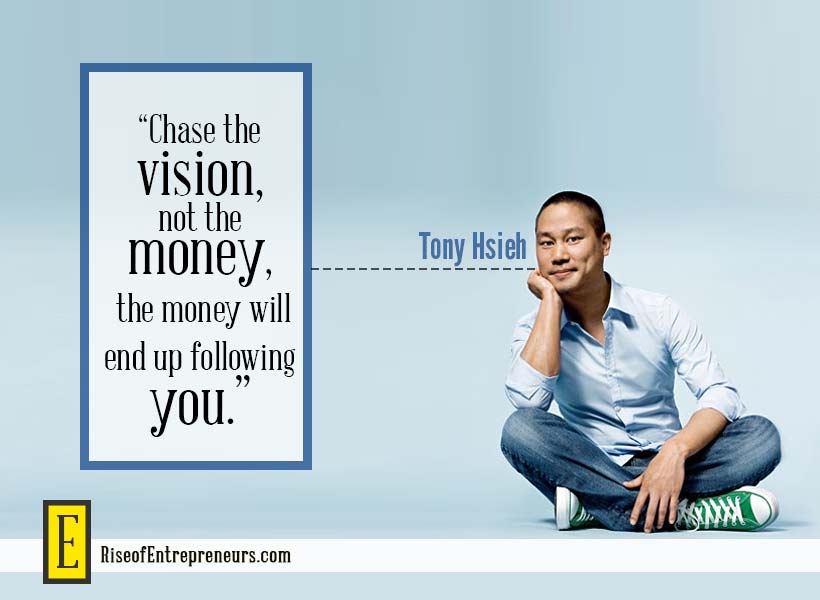
Tony Hsieh, CEO and founder of Zappos speaks about culture in a very clear way “Our belief is that if we get the culture right, most of the other stuff – like delivering great customer service, or building a long-term enduring brand and business will happen naturally on its own”
He believes in this so much that every year he produces a ‘culture book‘ for the company. This isn’t something that management drafts with rules and guidelines and inspirational words but it is something that all employees, partners and vendors are invited to feed into.
The submissions are not edited except for typos as it is intended to capture the culture of his special club.
He gets that the culture of the business is the driving force behind it but he also gets that you can’t dictate it – it is what it is and he uses the book to capture the pulse of the organisation in a clean way.
If you read Hsieh’s book ‘Delivering Happiness‘ you will learn the lengths the company goes to, to ensure that the right culture is ingrained in every employee from the minute they join and even some novel ideas to encourage people who “don’t fit” to quickly exit (they will pay you €2,000 to quit!) to ensure they don’t infect the business.
Culture creep
An article caught my attention recently in the Daily Telegraph about the recent VW scandal with the headline ‘Emissions rigging scandal was caused by the firm’s culture‘
The chairman, Hans Dieter Potsch stated that “misconduct, flaws in our processes and an attitude that tolerated breaches of rules” had been allowed stretching back over a decade and ending with the company deliberately cheating pollution control tests on a massive scale.
He went on to state “This was not attributable to a once off error, but an unbroken chain of errors“.
The day an employee starts a new job they quickly learn the lay of the land – what is the place like, what does it take to progress, what things get you in trouble, what are the golden rules?
These important things aren’t what is printed in the ‘hand book‘ or on the company website but they are the living, breathing dynamics of everyday work life that you need to learn quickly if you want to survive and progress in your new job.
Ironically on the VW website they have a campaign called “Think Blue” . Read the blurb: “Everyone can help to treat our environment better. At Volkswagen we are not satisfied just to build cars with lower CO2 emissions. Instead we have taken a much more holistic attitude towards ecological sustainability: “Think Blue.”
I couldn’t find anything on their website about the culture and values of the company.
What happened at VW ?
It seems that a culture creep happened whereby my boss thought it was ok to bend the rules because his boss thought it was ok because his boss said it was and this obviously crept up and down the organisation until a culture of honesty and integrity (corporate buzzwords you will regularly see as key values) had virtually disintegrated. This however didn’t stop the marketing machine with their ‘Think Blue‘ campaign!
This culture creep obviously took years to infect the company but it did have to start somewhere with people in senior positions for whatever reasons (pressure, bonuses, incompetence?) making really damaging decisions, which have possibly irrevocably wrecked the proud reputation of this fabulous company built gradually since the forties.
A strong culture is a core element of your brand and it needs to be nurtured and protected by every single person in your organisation. The branding, inspirational taglines, value statements, books and brochures should be expressions of this culture but they must be real and must genuinely reflect the ethos and ‘truth‘ that exists in the business.
We were back at this point again with a client of ours.
We were being asked by the media if our client would do interviews as a result of some really great news that we had pushed out in a press release.
Of course we had advised our client that this would more than likely happen but she was adamant that she did not want to do newspaper and radio interviews “I hate to be seen as blowing my own trumpet” and “won’t the media be quick enough to cut the legs from you when things go wrong?“.
These were really ‘hard set‘ beliefs that she had and there was no shifting them. As her communications advisers we had to push her and explain that doing these interviews would be great for the business and would help to achieve the objectives that they had set for us.
Her last comment really struck a chord with me – “Won’t the media be quick enough to cut the legs from you when things go wrong?”
To be honest when things go wrong everyone will question what happened and this is the general public and the media. Mostly you can’t predict when these things happen but sometimes you can. In either case you should be prepared by having carefully built up your reputation wall.
Reputation Wall
Imagine all of the good things that you and your organisation does – these things will help to start building a “reputation wall” for you.
Great products, excellent customer service, paying your suppliers on time, being courteous in business, being a responsible corporate citizen, looking after your team and doing charitable work are all fantastic things that help to build that reputation wall with your various stakeholders.
“They are a great company” is what you want people saying about you.
PR can help to accelerate your good news and with the help of some careful planning this reputation wall will be built even higher by reaching a much wider audience through the media and other communications channels such as social media.
Your reputation wall will hep you win business, get loans, get credit, get planning permission, get landlords wanting you as their tenant, attract great staff but this isn’t the only time it will help you.
In the event that something does go wrong (and it often does unless you are extremely lucky) your organisation will be seen as one that should be believed and trusted and as a result you will be forgiven for whatever has gone wrong. The higher and stronger your wall is the more it will protect you.
I explained all of this to my client and thankfully she did listen to me and agreed to do one of the radio interviews. I smiled as I listened to her doing her fantastic company proud.
Last night Fianna Fail issued a statement after the resignation of disgraced Councillor Joe Queenan (don’t you love the camera hidden in the box of tissues!)
The statement was as expected:
“Following the Primetime Investigates Standards in Public Office programme, a Spokesperson for Fianna Fáil commented, “Tonight the Party has accepted the resignation of Cllr Joe Queenan. Some of the behaviour displayed in tonight’s programme was shocking and completely unacceptable. The instances where there appear to be clear breaches of the law need to be fully investigated by the Gardaí and prosecutions brought where appropriate.”
It was an appropriate statement and it was very important that Fianna Fail issued it quickly but I do have a big question – why a Spokesperson?
Why do organisations like this choose to go this anonymous, nothing ‘spokesperson‘ route instead of grabbing the opportunity and demonstrating clear leadership, authority and direction?
We don’t want a ‘Spokesperson‘!!
Instead we want a leader, someone who speaks out, someone who is willing to take responsibility and put their name behind the statement and show clearly what is expected of their organisation.
We want a person who will take the interviews, face the music and show some conviction.
Next time you are writing a press release try to avoid the bland, cop out of the “Spokesperson said” if you want to show leadership and authority and you want people to take you more seriously.
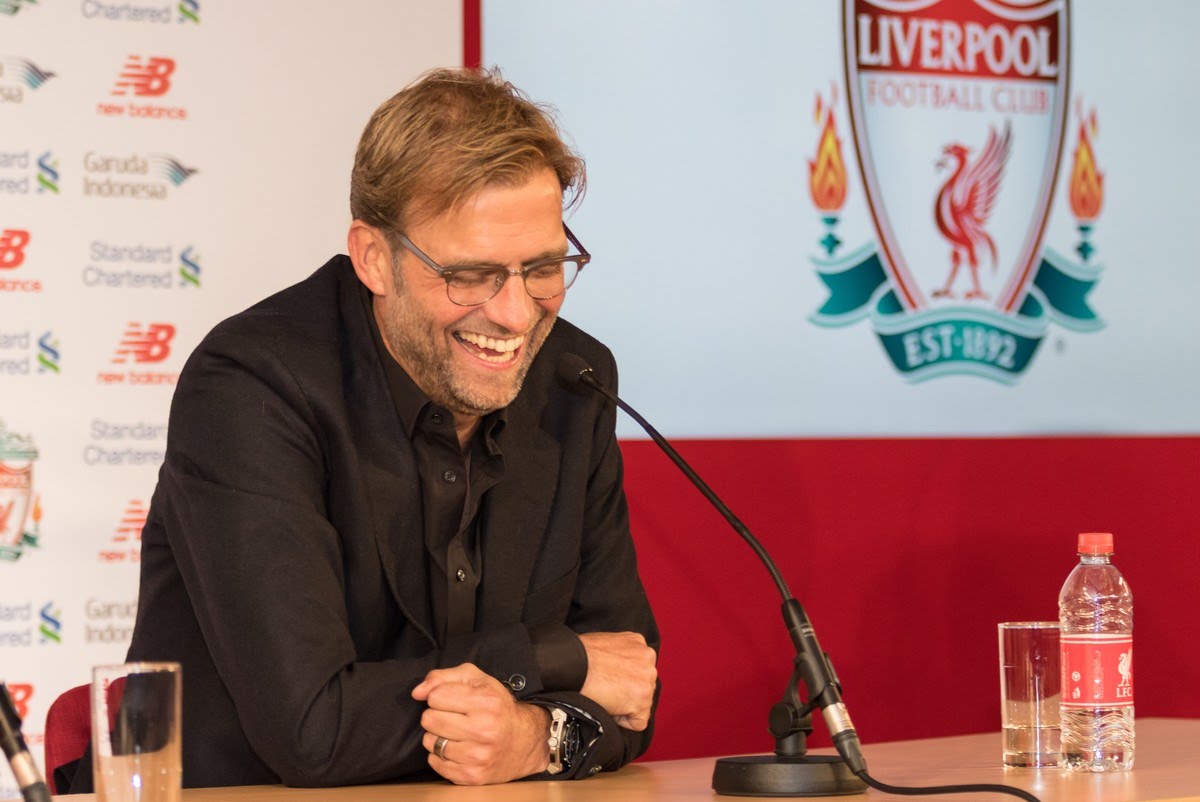
I’m writing this a little bit depressed after a very disappointing defeat away to struggling Newcastle but in general we have seen a transformation of Liverpool FC in the last two months since Jurgen Klopp, the manager has arrived.
The players have been transformed, the same squad that we thought were lousy purchases are now looking like great players and we have had a few very impressive results of late (except for Newcastle!) and it does seem to be wholly down to the charismatic manager (the self declared Normal One) who has previously enjoyed huge success in Germany with Borussia Dortmund.
Pretty much every Liverpool fan believes that success is around the next corner, which was certainly not the case before he joined the club.
How can a manager make such a difference and can the lessons we learn from him be applied to our own businesses?
What does Jurgen do that is so special?
1.”Belief”
The first thing he did when he joined the club was he made a declaration to the fans “We need to change from doubters to believers”
He gave every fan and player something to think about – we must believe if we want to achieve, which is a simple and yet powerful statement.
He went on to say that he believed in the team at the club, which was why he joined in the first place – if you were a player listening to these words you would feel good about yourself.
Do you believe in your team?
2.Honesty, openness and no jargon
When he is asked a question by the media he gives a straight, honest and open answer. He talks in a simple way that we all understand and can relate to.
He tells us that football is a simple game ..he is right!
Can you be open and honest with your team?
3.Don’t be afraid to hug!
We watch him going onto the pitch after the matches and playfully hugging the players. This seems to be a lot more than professionals doing their jobs!
Are people happier when they are treated like this?
4.Have fun
Jurgen loves to laugh, he has a huge smile and he seems to do it all of the time and it is infectious. At the press conferences the media laugh with him.
He tells the players to enjoy themselves on the pitch.
Can work be fun?
5.Don’t take it too seriously
Unlike Bill Shankly the legendary Liverpool manager who said football was “more important than life or death” Jurgen says it is just a game and that it should be enjoyed and not taken too seriously – you can see he lives this.
Are your team so stressed that they can’t function properly?
6.Work Hard
This is a key success factor with him. All of his teams are known for their ferocious work ethic – without hard work you won’t win.
This is totally non-negotiable with him.
Are your team prepared and motivated enough to give you 110%?
7.Have a plan
Already he has managed a few historic victories against some of the big teams and he puts this down to hard work combined with good planning. In one of these matches he fielded a surprising team who played exceptionally and won – he explained after that he had time to plan and prepare with this group of players so there was no point using some of the bigger stars.
Are you planning carefully?
8,Things go wrong – that’s football!
He commented that with the Liverpool team he noticed that they would implode if they conceded in a match and as a result could not recover from this situation.
He has taught the team to accept that things will go wrong and that this is part and parcel of competing – just learn not to give up when it happens!
Do your team have resolve?
9.Mr Motivator
He does seem to have the gift of bringing the best out of each and every single player. He seems to know when a hug works, when a few positive mentions in press conferences will work and when helpful advice from the sideline works (he does scream and roar during the matches).
We clearly don’t see everything that goes on but the players have gone on record as to the huge difference he has made to them.
Do you feel motivating your team is important?
10.Passion
Take just one look at him when he celebrates a goal or even when he lives every kick and moment of the matches…he is incredibly passionate!
If you aren’t passionate can you expect your team to be?
Saying the right thing at the right time is a huge skill.
The team need motivating, the meeting needs cooling, a big point needs to be made, a situation needs rescuing, a group needs convincing, the proposal needs selling ..whatever the situation its important to say the right thing and deliver it in a manner that connects with your audience and has the impact you desire.
Like every other skill it is something that we learn over time and sometimes for important things we might even need a little assistance!
We will never surrender
Imagine Winston Churchill making his speech in the House of Commons on the 4th June, 1940 with a country facing war and in serious trouble and the whole population fearful:
“We shall go on to the end, we shall fight in France, we shall fight on the seas and oceans, we shall fight with growing confidence and growing strength in the air, we shall defend our island, whatever the cost may be.
We shall fight on the beaches, we shall fight on the landing grounds, we shall fight in the fields and in the streets, we shall fight in the hills; we shall never surrender”
Winston Churchill wrote most of his own speeches but drafts went through many hands. Some of the ideas for this speech apparently came from an American newspaper editor, William Simms.
I have a dream
Imagine Dr. Martin Luther King standing in front of 250,000 civil rights supporters from the steps of the Lincoln Memorial on August 28th 1963 calling an end to racism in the United States:
“Let us not wallow in the valley of despair, I say to you today, my friends.
And so even though we face the difficulties of today and tomorrow, I still have a dream. It is a dream deeply rooted in the American dream.
I have a dream that one day this nation will rise up and live out the true meaning of its creed: “We hold these truths to be self-evident, that all men are created equal”
Clarence Jones wrote some of Dr. Martin Luther King’s speeches with input from his advisor Wyatt Walker and of course the finishing touches applied by Dr. King. On this occasion Walker did not want there to be any reference to “I have a dream” as he felt it had been overused already by Dr.King in previous speeches.
Apparently Dr King when he felt his prepared speech wasn’t delivering the right impact he decided to abandon his written text and use his “I have a dream” speech. It worked!
Ask not..
Imagine a 43 year old John F Kennedy addressing the crowd in his inaugural, United States Presidential speech in 1961 trying to instil some national pride in it’s citizens:
“My fellow Americans, ask not what your country can do for you – ask what you can do for your country”
Theodore Chaikin “Ted” Sorensen was President John F.Kennedy’s legendary speechwriter as well as his advisor and special counsel. President Kennedy once called him his “intellectual blood bank“.
Yes we can
Imagine another United States President, Barack Obama addressing a crowd in Dublin on May 23rd, 2011 when our country was battered and bruised after a number of torturous recession years with little sign of progress:
“Never has a nation so small inspired so much in another. Irish signatures are on our founding documents, Irish blood was spilled on our battlefields, Irish sweat built our great cities. Our spirit is eternally refreshed by Irish stories and Irish song, our public life by the humour and heart and dedication of servants with names like Kennedy and Reagan, O’Neill and Moynihan”
“This little country, that inspires the biggest things, your best days are still ahead. Our greatest triumphs, in America and Ireland alike, are still to come. And Ireland, if anyone ever says otherwise, if anybody ever tells you that your problems are too big, or your challenges are too great, that we can’t do something, that we shouldn’t even try, think about all we’ve done together. Think about whatever hardships the winter may bring, spring-time’s always just around the corner.
And if they keep on arguing with you, just respond with a simple creed: Is feidir linn. Yes we can. Yes we can. Is feidir linn.”
I watched that speech in our office with the team and I felt it gave everyone in the country an important lift (as well as the Queen’s visit a few weeks previous).
Jonathan E. “Jon” Favreau was the Director of Speechwriting for President Barack Obama who is quite adept at writing his own speeches. In his second term in office he changed to Cody Keenan, who Obama refers to as “Hemingway”, writing in a much more grounded style than the lofty grandiose style of Favreau.
“Yes we can” was the stand out element or ‘tag line’ of Obama’s famous speeches and this nearly never made it as Barack Obama thought it was too “corny” and he had to be persuaded by his wife Michelle to use it!
When it came to ‘saying the right thing‘ even all of these brilliant individuals needed help from someone..
I was in the middle of a social media training session with the senior team of a client and Mick, who was one of the elder statesmen in the group asked a question.
This brand new world is a scary place for Mick who has been doing his own thing in his own way for a long time and now that day has come. The company believe that they are missing out by not fully embracing technologies that might deliver them business and LinkedIn is the platform they chose for me to run a training session for them.
I’m guessing that Mick and probably some of the other guys have been hoping that this day wouldn’t come but eventually it has arrived and I was the ‘scary monster‘ who was standing up at the top of the room talking about this dreaded LinkedIn, the thing that they feared could possibly render all of their skills, crafted over many years out of date and useless.
His body language, disguised with a little bit of humour screamed “I am choking, please let me out of here!“.
He sat there during the session saying very little.
At the beginning of these sessions I spend a lot of time with the team figuring out what ‘stories‘ they want to tell about their organisation.
“We are an experienced team, we have our own R&D department, our technology is ahead of everything else in the marketplace, how the company came about is very compelling, we work with some of the biggest companies, we are successful, we are expanding, there is a genuine 24/7 service and the culture is very strong.”
This is a company you would want to do business with.
We explored how we could communicate some of these things on an ongoing basis with a combination of blog posts, published posts, company and personal status updates on LinkedIn.
I always stress that you must be clear what your objectives are and the messages that you want to communicate. I talk about developing a ‘message board‘ that is built into the organisation social media strategy for the company and this should be shared with all team members to ensure they understand what the content guidelines are.
Out of the blue Mick popped up with a question: “But what if someone says something wrong?“.
I think he had accepted that it was time to face his fear and now he threw out his real fear that in ways has been fuelled by media reports about damage that has been done to organisations by stupid things being posted by people working there.
What could we possibly do to prevent that from happening?
Ironically he made this comment right in the middle of that part of the training where I am setting the content guidelines with the team.
On the phone, chats with team members, meetings with clients, conversations at conferences… we all have the potential to say something stupid or damaging but we are trained and trusted to do our jobs and represent the places we work for properly.
Social media is no different and you do have to trust your teams but you must give them clear guidelines and explain what is expected of them.
Unfortunately those ‘stupid’ mistakes happen when this is not done and when someone inexperienced (typically when someone is “good” on Facebook) and lacking in knowledge about the organisation is given free rein to post for the organisation. It can also happen when an outside agency is appointed to post on behalf of the company without proper briefing and controls.
Mick, you are right but we will make sure this won’t happen here!
p.s. Mick knows his customers and his organisation better than anyone and will fly once he loses his fear.